
Child psychiatrist and psychotherapist Aoife Twohig attended our training session in Dublin this summer and sent us this report on the state of children affected by conflict worldwide
How are children being affected by conflicts today?
In recent years there has been a significant increase in armed conflicts and wars worldwide. This year a UN Report on Children and Armed Conflict (A/80/723-S/2026/357) found that in 2025, violations against children in armed conflict reached “shocking levels… with an unprecedented number of children affected”, verifying 38,558 grave violations and violations which affected 24,174 children worldwide.
This was the highest number of children experiencing grave violations since the beginning of the UN mandate to monitor children and armed conflict 30 years ago. That followed a landmark UN report by Graça Machel in 1996, which exposed the wide-ranging and systematic nature of the effects of war on children. Violence, displacement and severed attachments not only harm children physically but also emotionally, with many forced into premature adulthood.
In 2009 and 2013 UN efforts codified the Six Grave Violations against children in armed conflict, now central to global monitoring and advocacy. These grave violations are: the killing and maiming of children; recruitment or use of child soldiers; attacks on schools or hospitals; rape or sexual violence; abduction; and denial of humanitarian access.
Despite such frameworks and legal protections, including the UN Convention on the Rights of the Child, the 2025 Secretary-General’s report showed that grave violations have continued with impunity, resulting in significant humanitarian consequences and disproportionately affecting children. It reported that the killing and maiming of children has increased to alarming levels, with surges of 34 per cent and 10 per cent respectively.
The highest numbers of grave violations in 2025 were verified in Israel and the Occupied Palestinian Territory (12,445), the Democratic Republic of the Congo (4,114), Nigeria (2,560), Myanmar (2,203) and Somalia (2,195). It is of great concern that the report found that in the majority of grave violations against children, government forces were responsible and were the main perpetrators of the killing and maiming of children, attacks on schools and hospitals and the denial of humanitarian access.
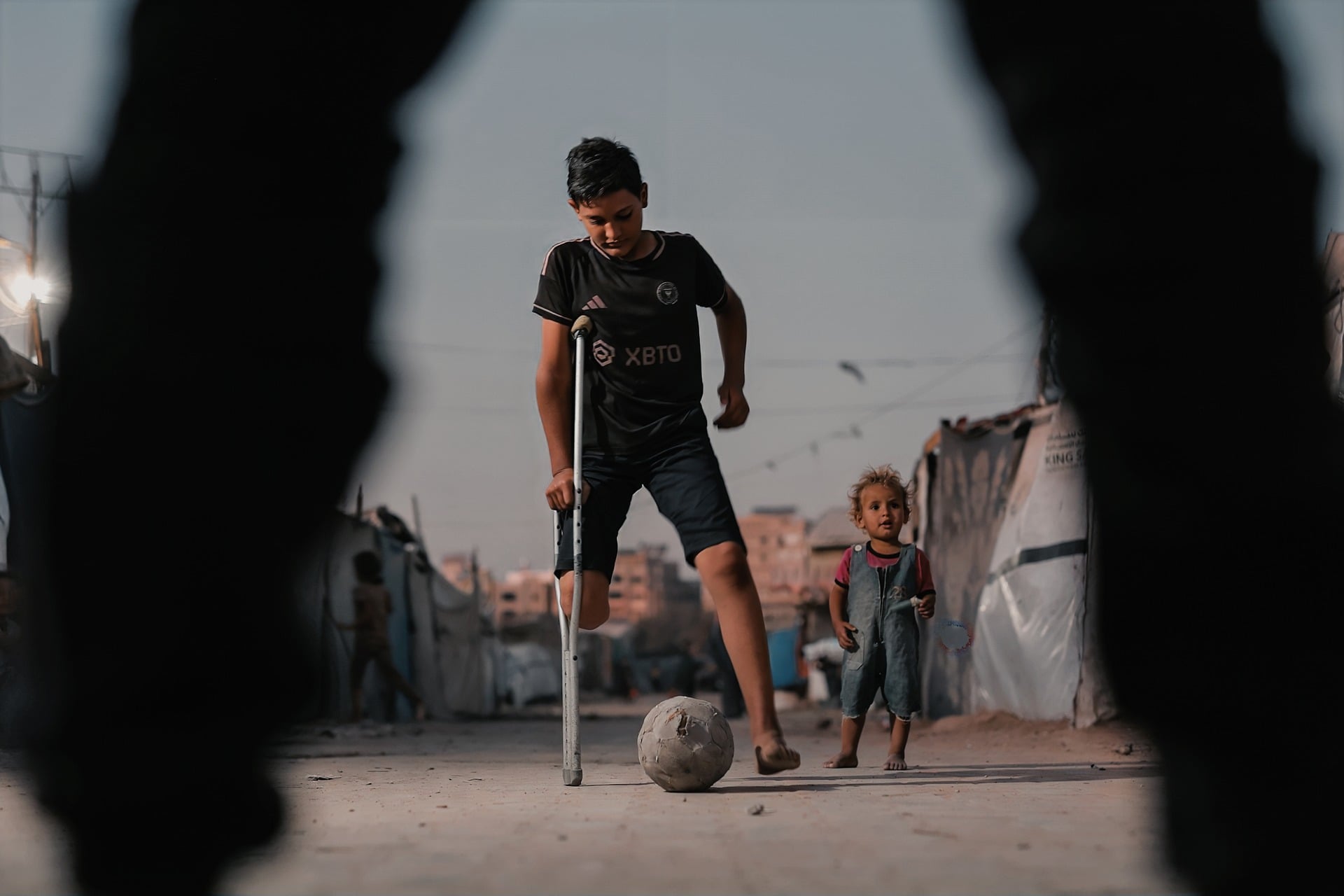
Children are impacted by conflict and war while escaping fighting and while seeking shelter, food, water or medical care, all of which are enshrined as essential human rights. As children navigate war-affected areas, they are exposed to explosive remnants of conflict, which can cause life-long disabilities. In Gaza for example, we have seen the highest number of child amputees per capita of population in the world.
Conflict and war devastate societies through the destruction of homes and infrastructure, disruption of education and healthcare systems and loss of access to basic resources such as safe water and food. More than 117 million people globally are currently displaced by conflict and violence. A staggering 49 million of them — over 40% — are children below 18 years of age. Over half of the world’s refugee population is made up of children and 2.3 million children were born as refugees. Young people aged 15-24 also constitute a large proportion of populations affected by forced displacement. Many will spend their entire childhoods away from home, sometimes separated from their families.
Approximately 1-1.25 billion children are reported by the UN to experience some form of violence each year. Devastating violence has been perpetrated against children and women in armed conflicts over the last two years. Between 2023 and 2024, the number of women and children killed in armed conflicts quadrupled, compared with 2021-2022.
Devastatingly, over 21,000 women and almost 17,000 children were killed in conflicts during 2023-2024, with 80% of child deaths and 70% of women’s deaths recorded in Gaza alone.
The consequences of war extend beyond immediate physical danger, influencing individuals, families, communities and global wellbeing over generations. In many countries, the collective memories of conflict serve as a reminder that the psychological impact of war is neither distant nor abstract.
For mental health professionals working with children across all contexts, it is essential to understand and reflect on how global events shape the wellbeing of young people. War and conflict highlight the deep connection between social conditions and mental health. While many children demonstrate remarkable resilience, exposure to conflict can disrupt development and attachment in lasting ways.
What are the psychological impacts of war on children?
We know through many decades of research the devastating psychological impact of war. John Bowlby was a child psychiatrist in the mid-20th century whose groundbreaking work on attachment in child development and the impact of loss of attachment figures has been seminal to our understanding of the developmental origins of mental health difficulties: his work was rooted in the experience of children affected by war. Attachment theory holds that the earliest experiences lay the foundations for subsequent interpersonal relationships, resilience and self-worth.
War disrupts developing attachment bonds through direct and indirect means – death, displacement and separation. Parents’ emotional availability may also be impacted by the urgent immediate need to survive and to find shelter, food and water. Separation, physical injury and pain are all major activators of the attachment system, in which the child seeks proximity to trusted caregivers when distressed. The absence of such reliable care can lead to persistent activation of distress without adequate comfort or assuagement. In addition, research has shown that children during armed conflict are more likely to be exposed to abuse, maltreatment and other violence.
The impact of witnessing often multiple traumatic events, including the killing or maiming of relatives or community members, compounded by the destruction and loss of homes, schools and areas to play, leave children at high risk of acute and post-traumatic stress disorder. There are high levels of anxiety and depression reported in children and adolescents displaced by conflicts, with increasing recognition of high levels of suicidal ideation in this population. Many children and young people with pre-existing mental health or disabilities are particularly vulnerable, due to the additional trauma and stress, and to lack of appropriate treatment and therapies. In view of the increasing levels of war and conflict, the increasing exposure to violence, loss and displacement, it is imperative that humanitarian and health services identify and provide appropriate and evidence-based responses and interventions to children and families.
How can healthcare workers, health services and societies respond to the increasing impact of war on children?
It is vital that when providing such services, these are aware of the context and structural factors which are present in the conflict. It is imperative that any interventions involve the local community in planning and delivery of interventions. Approaching with cultural humility is essential.
Attention to the individual’s and family’s needs for safety and secure accommodation, adequate welfare supports, health care, community supports, educational placements, and opportunities to learn the local language are all important first steps following displacement. Attending to these often-complex needs requires sensitivity, clear communication and understanding of the context on behalf of the organisations involved, as re-traumatisation can occur. Developing trust is essential.
For mental health services, often overstretched and under-resourced, accessing services in a timely way can be limited. Providing a brief child-centred and evidenced-based group intervention to teach skills to support children who are experiencing traumatic stress symptoms has been shown to reduce symptoms of PTSD and depression in children affected by war and conflict. Identifying children in need of more intensive individual and family support is essential.
In Children’s Health Ireland, where I work, we have linked with CAW UK to develop a tiered model of care for children who have been displaced by war and conflict. We have received funding from the Children’s Health Foundation to receive organisation-wide training and to deliver the Teaching Recovery Techniques group intervention, for children and families who have been displaced by war and conflict to Ireland.
We were extremely grateful to CAW UK for delivering an immensely inspiring three-day in-person training in May 2026. We were delighted that our group of participants represented people from around the globe working in the Irish health system and committed to supporting children following war and conflict. We are currently recruiting for our first groups, which will be delivered this autumn. We are looking forward to meeting the children and families over the coming weeks and giving them the support they so desperately need.
Aoife Twohig is a child and adolescent psychiatrist at Children’s Health Ireland child psychiatrist and psychotherapist at Children’s Health Ireland.

